

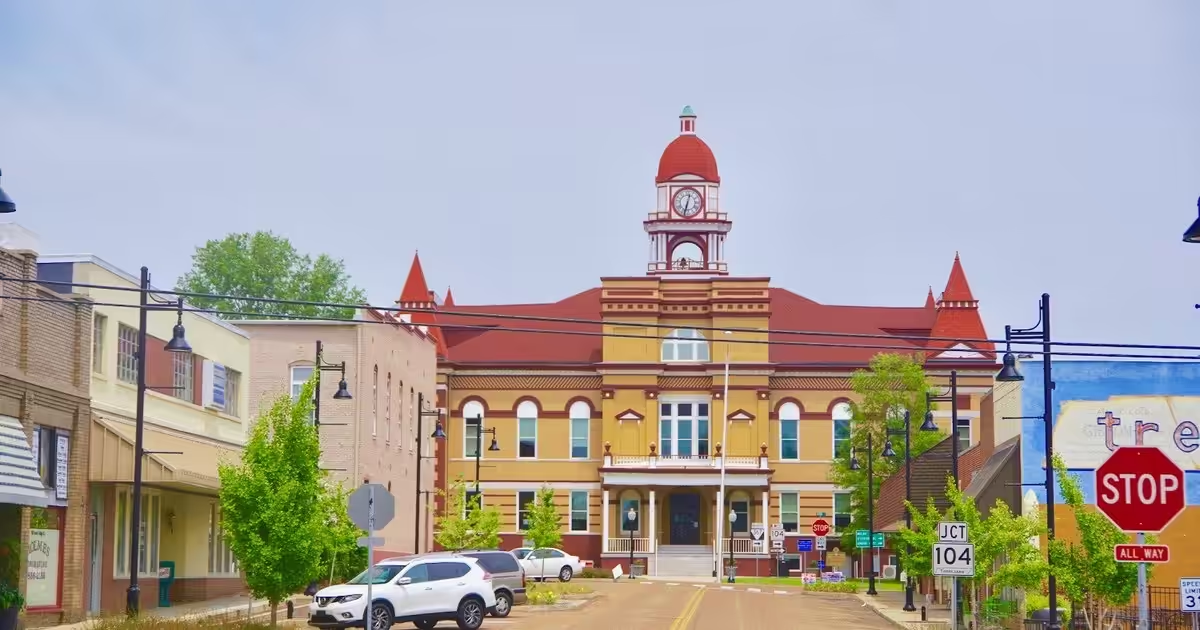
Compare NFIP and private flood options for Trenton homes, with straight talk about maps, deductibles, and what homeowners insurance does not cover.
Trenton, TN: flood risk in context
Trenton is home to about 4,134 residents and sits in Gibson County.
Trenton lies within the Gibson County area. Everyday flood exposure is driven by local hydrology and drainage more than any one landmark, so check maps for the specific property.
Owners and buyers in Trenton should remember that standard HO-3 policies exclude flood. Because the NFIP limits how much it pays, a higher-value home may call for private or excess flood to approach full replacement cost. Look up the official Federal Emergency Management Agency flood maps to see whether your address in Trenton, TN sits in a special flood hazard area.
Tennessee flood planning should begin with current flood maps and SFHA status, then compare NFIP limits against private flood or excess options when dwelling values go past NFIP maximums.
Trenton homeowners and the flood gap
A typical homeowners policy in Trenton, TN does not cover flood damage. A “flood” is usually surface water from heavy rain, rising rivers, storm surge, or drains that cannot keep up, and losses can run high even where maps show lower risk.
Lenders usually require flood insurance when the mortgaged property sits in a Special Flood Hazard Area (SFHA). A large share of NFIP claims have historically come from moderate- and lower-risk zones, so coverage outside SFHAs often still pays off. Start with current FEMA flood maps for Trenton, TN (official Flood Map Service Center, search by address), then price actual options.
Things Trenton owners should understand about the NFIP
| Topic | What to know |
|---|---|
| What it is | Federal flood insurance through Write Your Own carriers participating in the National Flood Insurance Program (NFIP). |
| Dwelling limit | Residential building coverage is capped at $250,000 under the National Flood Insurance Program. Confirm current limits on your quote. |
| Contents limit | Separate contents coverage applies, up to $100,000 for what you keep inside the home; schedule high-value items carefully. |
| Waiting period | Plan on 30 days between purchase and coverage. Exceptions: no wait when the policy is bought with a mortgage closing, increase, extension, or renewal, and a one-day wait within 12 months after a map change newly places the home in a high-risk zone (FloodSmart). |
| Private / excess | Private flood markets and excess flood can fill gaps when NFIP caps are too low or underwriting fits better privately. |
Coverage limits, waiting periods, and preferred-risk eligibility get updated, so your quote packet is the source of truth.
What pays and the usual exclusions
Typically covered by a flood policy
- Dwelling: The foundation, framing, electrical and HVAC systems, and permanently installed fixtures after a flood, within the policy terms.
- Contents, when purchased: Belongings inside the house, with its own limits and exclusions.
- Debris removal: Frequently included within policy limits to clear debris after a covered flood.
Frequent gaps / confusion
- Additional living expense: Additional living expense is narrower or structured differently than in an HO-3 policy, so read the form.
- Property outdoors: Landscaping, outdoor septic systems, and many exterior items can be limited or excluded.
- Water that is not flood: Sewer backup, sump overflow, or appliance leaks often need separate endorsements and do not count as classic flood.
Take time to review the specimen policy. Policy language differs between NFIP and private flood policies.
Flood premium drivers in Trenton, TN
In Trenton, flood pricing depends on the exact address. Insurers and NFIP-style rating engines look at map zone, elevation, foundation design, and the limits you select, so two nearby homes can still get different prices.
National Flood Insurance Program rates are now set through FEMA’s Risk Rating 2.0, which has applied to every policy since April 2023. Rather than pricing mostly by flood zone, it considers each Trenton building’s distance to flooding sources, its elevation, the kinds of flooding seen nearby, and what it would cost to rebuild (FEMA).
Flood map and zone classification (including SFHA versus moderate or low risk) feeds into pricing for Trenton properties in Tennessee. Confirm the current flood panel for the exact building instead of trusting neighborhood assumptions.
Elevation weighs the lowest floor height relative to Base Flood Elevation when that data applies, and it remains one of the biggest NFIP rating inputs for many buildings.
Construction and foundation type count too: slab, crawlspace, elevated, and basement designs can price differently at the same address in Trenton.
Replacement cost and coverage limits drive the premium as dwelling values rise. Larger rebuild estimates might mean adding private flood or excess flood above NFIP limits.
Deductible and contents choices add more control: higher deductibles generally lower premium, while contents limits are selected separately from building coverage.
Claims and prior losses remain part of the underwriting review. Loss history can influence private-market appetite and pricing for Trenton flood quotes.
Your flood premium comes from your own property details, not a citywide average. Flood pricing is address-specific, so get a quote using the property details.
How we help Trenton clients
Freedom Insurance Group, an independent agency, holds licenses in Tennessee and also in Texas, Colorado, and Missouri. We help Trenton clients:
- Check whether lender-required flood applies and what paperwork the closing needs.
- Weigh NFIP placements next to private flood markets where available.
- Discuss excess flood when dwelling values exceed NFIP maximums.
- Line up flood with home and auto so you are not left guessing which policy responds.
Reach us at (800) 253-1482 or begin a flood quote online.
Local flood records for Trenton
FEMA’s National Risk Index classifies inland-flooding risk in Gibson County as “Relatively Low”.
Since 2000, Gibson County has been named in 9 federal disaster or emergency declarations that involved flooding; the most recent is Severe Storms, Straight-Line Winds, Tornadoes, and Flooding (June 2025).
NOAA’s Storm Events Database logged 5 flash-flood reports and 1 river or areal flood report inside about 5 miles of central Trenton from 2016 through 2025; the most recent was in February 2025 close to Trenton. NOAA attached a property-damage estimate to 3 of them.
Census Gazetteer files put Trenton’s land area at about 8.0 square miles, with almost no open water inside city limits. It lies inside Gibson County.
Across Gibson County, OpenFEMA data counts 114 residential flood policies in force for about 21,113 residential structures, roughly 0.5% of homes. In the SFHA alone, 73 of 535 structures are insured for flood (14%), which means the large majority of homes have no flood policy.
The USGS Geographic Names Information System (GNIS) places Cain Creek and Thompson Levee Creek within about 2 miles of central Trenton. Property near these channels is where a lender is most likely to ask about the flood zone.
FEMA’s NFIP status records list Trenton as a participating NFIP community (number 470062), whose first FIRM dates to 1983. The effective map panel date is November 5, 2008.
The Census Bureau’s ACS 2020–2024 estimates show that about 72% of Trenton’s homes were built before 1980 and 6.4% since 2010. Buildings finished before the community’s first Flood Insurance Rate Map (1983) are treated as pre-FIRM, which still matters when a flood policy is priced.
By the historical record, Trenton was established in 1824 and incorporated in 1847. Trenton first appeared on a FEMA Flood Hazard Boundary Map in 1974, in FEMA’s community records. Federal records show the first flood-related major disaster declaration for Gibson County was DR-459, Severe Storms and Flooding, in March 1975. Before 2000 the county was named in 8 flood-related major declarations in total.
More Tennessee coverage resources
Trenton, TN flood quotes
Ready to price flood insurance on a Trenton property? Request a free flood insurance quote or call (800) 253-1482.
