

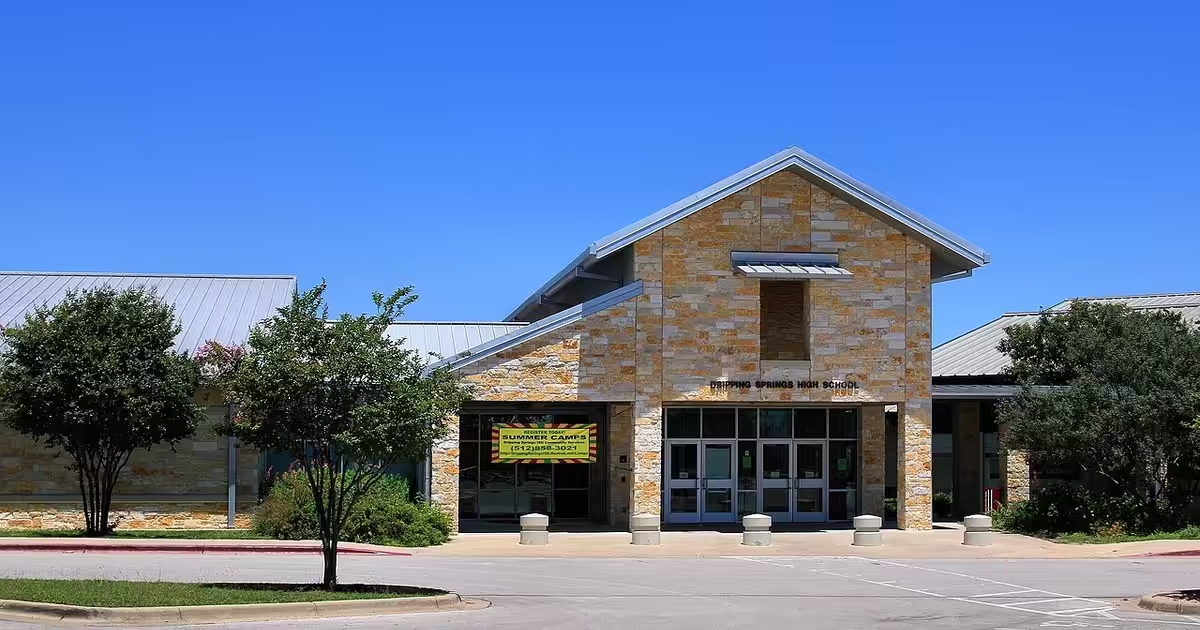
Dripping Springs residents get independent agents who compare homeowners quotes from 25+ carriers.
What home insurance costs in Dripping Springs
The typical homeowners insurance premium in Dripping Springs, TX is about $2,247 annually for a typical local home (typical local home value about $635,600). For a $300,000 dwelling, expect around $1,562 per year; for a $600,000 home about $2,198; and for a $1,000,000 dwelling about $2,860. Freedom Insurance Group rates are often about 40% lower — near $1,348 per year for a typical home, roughly $937 for a $300,000 home, about $1,319 for a $600,000 home, and around $1,716 for a $1,000,000 home.
| Dwelling Coverage Limits | Average Annual Premium (incl. Windstorm & Hail Coverage) |
|---|---|
| $100,000 – $200,000 | $1,214 |
| $200,000 – $300,000 | $1,357 |
| $300,000 – $400,000 | $1,667 |
| $400,000 – $500,000 | $1,887 |
| $500,000 – $600,000 | $2,100 |
| $600,000 – $700,000 | $2,267 |
| $700,000 – $800,000 | $2,406 |
| $800,000 – $900,000 | $2,587 |
| $900,000 – $1,000,000 | $2,769 |
Band premiums are midpoints on the Dripping Springs dwelling curve (typical local home value about $635,600). Illustrated estimates, not a quote.
Figures are 2026 market-style estimates for Dripping Springs, TX, using a typical local home value of about $635,600. Freedom figures apply an approximate 40% savings vs the local typical premium for illustration. Your quote depends on dwelling limit, roof, deductible, claims, and carrier. Not a guarantee.
What makes Dripping Springs, TX unique
Around 2,483 people live in Dripping Springs and sits in Hays County.
For a smaller Texas place like Dripping Springs, the insurance picture centers on local construction, access to fire protection, and regional storm patterns.
Most homes are single-family houses typical of the Hays County area; replacement cost, roof age, and construction type still drive most premium differences from street to street.
Carriers rating North Texas homes often price in severe thunderstorms, hail, and tornado risk common across the Plains.
The six parts of a home policy
This limit pays to rebuild the structure of your home after a covered loss, and it should match what rebuilding costs locally right now.
Detached garages, sheds, fences, and similar buildings that stand apart from the house are protected by this part.
Furniture, clothing, and the other things you own indoors are covered here, though special limits can cap higher-value categories.
This coverage can help with additional living expenses when a covered claim makes the home uninhabitable for a time during repairs.
It responds when you are legally responsible for injuring someone or damaging their property caused by a covered incident.
This coverage can help with guest medical bills for injuries that occur on your property, often without needing a formal liability claim.
Homeowners discounts in Dripping Springs, TX
| Discount | What it means | Typical amount |
|---|---|---|
| New Home | New construction recently purchased | up to 40% |
| Age of home (5 yrs) | Newer homes | up to 26% |
| Bundle | Home and auto together | up to 25% |
| Upgrades | Electrical, plumbing, heating, roof updates | up to 20% |
| Hail-resistant roof | Class 1–4 impact roof | up to 12% |
| Claims-free | Multi-year claims-free history | up to 5% |
| Security / alarms | Monitored fire or burglar alarm | up to 4% |
| Paid in full | Pay annual premium upfront | up to 7% |
Discounts and their size differ from carrier to carrier. “Up to” is the high end, not a guarantee.
What shapes home insurance costs in Dripping Springs
Carriers build a Dripping Springs homeowners quote from several overlapping factors. Expect rebuild cost, roof age and material, and local storm or wildfire exposure to move the number most. Deductible choice and claims history can swing the final premium as much as the carrier brand.
Replacement cost comes down to a simple question: what would it cost to rebuild the house today, with similar materials, at today’s prices for labor and materials? When a Dripping Springs home has a higher rebuild estimate, the premium usually rises, as the carrier’s maximum payout grows.
Construction type and roof details also matter: frame versus masonry walls, the roof covering, and overall build quality all affect how a property fares in wind, hail, and fire common across Texas.
Location risk rolls up storm, hail, wildfire, and crime scores that can change by ZIP code and neighborhood within Dripping Springs, so two homes with similar rebuild costs might still quote differently.
A strong fire protection rating based on close hydrants, a nearby station, and a good protection class often makes pricing more competitive.
A recent claim on the house or by anyone in the household can push up premiums for Dripping Springs renewals as well as new policies, since claims history remains a major rating input.
Credit-based insurance score can move the price in states that allow it: insurers relying on it tend to price lower to applicants with better scores.
Home-and-auto bundles in Dripping Springs, TX
These are illustrated averages for bundling, not a guaranteed quote. Actual savings come down to carriers and drivers.
| Place | 1-car bundle | 2-car bundle | 3-car bundle |
|---|---|---|---|
| Dripping Springs, Texas | $258 | $436 | $636 |
Dripping Springs housing stock and storm history
Occupied homes in Dripping Springs are heated mostly with electricity (69%), utility gas (20%), and propane or other bottled gas (9.2%). Wood stoves and propane tanks are worth mentioning on an application, since they can affect eligibility.
The NOAA Storm Events Database logged 10 hail reports within about 5 miles of Dripping Springs from 2016 through 2025 (8 at one inch or more). Top size was 1.75 inches in April 2023.
From 2000 on, Hays County has been part of 10 major disaster declarations; the latest was Severe Storms, Straight-Line Winds, Tornadoes, and Flooding (May 2024).
In FEMA’s National Risk Index, Hays County rates above the low end for hail (“Relatively High”), tornado (“Relatively High”), winter-weather (“Relatively High”), and strong-wind (“Relatively High”).
Half of Dripping Springs’ homes were built in or before 2013. Roughly 67% of homes were built in 2010 or later, and age-of-home discounts come up often.
Census survey estimates (ACS 2020–2024) show about 3,127 housing units in Dripping Springs, and homeowners occupy close to 49% of the occupied homes. Looking at building types, 54% are detached single-family houses and 40% are in buildings with two or more units.
By the historical record, Dripping Springs was incorporated in 1981. Dripping Springs’ population went from 1,548 at the 2000 Census to 1,788 at the 2010 Census, and the Census Bureau’s July 2024 estimate is 10,165. That works out to about 557% more residents than in 2000.
Going further back, the Storm Prediction Center lists 17 hail reports within 5 miles of Dripping Springs between 1955 and 2015, topped by hail of 2 inches on April 14, 1977. 3 of those reports were 2 inches or larger. Federal tornado records from NOAA’s Storm Prediction Center list 6 tornadoes that began within 10 miles of Dripping Springs from 1950 through 2015, the strongest an F2 on April 14, 1977.
Comparing homes in nearby towns? See our home insurance pages for Bee Cave (11 mi), Lakeway (13 mi), and Steiner Ranch (17 mi).
ZIP codes we serve in and around Dripping Springs
78620
Browse Texas coverage options
Price homeowners coverage in Dripping Springs, TX
Freedom Insurance Group compares 25+ carriers for Dripping Springs residents. Reach us at (800) 253-1482 or request a home quote online.
