

Colorado · Auto Insurance · Collision
Colorado does not require collision coverage to satisfy the state’s financial-responsibility (liability) rules. Collision is optional by statute for a paid-off vehicle—but lenders and lessors almost always require it on financed or leased cars. This guide explains what collision actually pays, how deductibles and actual cash value work, and why Colorado hail damage is a comprehensive claim—not collision. Knowing which line on the declarations page answers a crash, which answers hail, and which answers the other driver’s injuries keeps shopping and claim decisions from getting tangled.
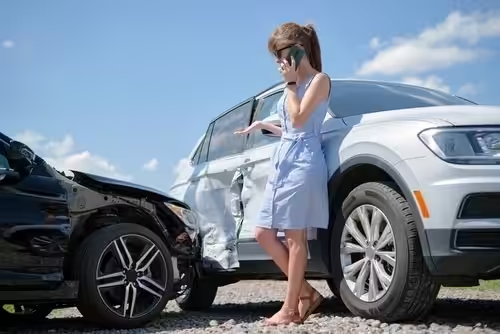
Colorado’s financial-responsibility rules ask whether you can pay for harm you cause others. They do not ask whether you can afford to fix your own bumper after a curb strike. That gap is why a paid-off older car can legally drop collision while a financed sport utility vehicle almost never can—and why hail protection lives on comprehensive, not on the collision deductible you debate after payoff.
Requirements on a loan or lease come from your finance contract—not from C.R.S. financial-responsibility statutes.
1. Is collision insurance required in Colorado?
Under Colorado Division of Insurance guidance, the coverage you must carry to drive legally is liability—bodily injury and property damage to others when you are at fault. Physical damage coverages (collision and comprehensive) are optional for compliance, though insurers must offer collision with certain deductible choices, and you may select higher deductibles.
When a lender or lessor requires physical damage coverage, the requirement is contractual collateral protection. It sits beside state law rather than replacing it. Dropping collision while a lienholder is still listed can breach the finance agreement even if your liability card still satisfies a roadside check. Read the loan or lease notice before you change coverages online.
| Situation | Collision required? | Why |
|---|---|---|
| Paid-off vehicle, owned outright | No (by statute) | State financial responsibility focuses on liability to others |
| Financed or leased vehicle | Usually yes (by contract) | Lender/lessor protects collateral until payoff |
| Want crash repairs paid on your car | Practical yes | Without collision, you fund repairs or a total loss yourself (or the at-fault driver’s liability—if they have enough) |
Use the table as a decision filter, not as a sales pitch. Paid-off and financed cars follow different rules for the same crash risk. If your goal is crash repairs on your own vehicle, collision (or the at-fault driver’s adequate liability) is the practical path—statute alone will not pay your body shop.
Related: Colorado car insurance laws · Colorado collision insurance · liability.
2. What collision covers (and what it does not)
Colorado Department of Insurance describes collision as paying for damage to your automobile when it collides with another vehicle or object, or overturns. Typical themes:
Collision is about your vehicle’s crash or overturn damage. It is not a substitute for liability when you hurt someone else, and it is not the right claim path when a parked car is dented by hail. Mixing those words in a claim call slows the adjuster and can send the file down the wrong coverage track.
- At-fault crash damage to your vehicle (subject to deductible and policy terms)
- Single-vehicle incidents such as hitting a curb, guardrail, or pole—when collision applies
- Not hail, theft, fire, vandalism, or animal strikes—those are usually comprehensive
- Not the other driver’s injuries or vehicle—that is your liability coverage
“Full coverage” in everyday speech usually means liability plus comprehensive plus collision, and often more. Carriers do not all package the same extras under that phrase. The declarations page—limits, deductibles, and listed drivers—is the only reliable inventory of what you bought.
Collision
Crash / overturn damage to your car. Deductible applies. Settlement often at actual cash value if totaled.
Comprehensive
Hail, theft, vandalism, fire, falling objects, wildlife—critical on the Front Range. Separate deductible.
Liability
Others’ injuries and property when you are at fault. Required for financial responsibility.
“Full coverage”
Marketing shorthand—usually liability + comprehensive + collision (and often more). Confirm the declarations page.
Product pages: comprehensive · full coverage.
3. Colorado hail note: collision ≠ comprehensive
Front Range and eastern plains storms produce frequent large hail. Roof and body-panel damage from hail is a classic comprehensive claim—not collision. Dropping collision after payoff does not remove hail protection if you keep comprehensive; dropping both leaves you self-insured for hail and crashes.
Front Range hail seasons make comprehensive the coverage many Colorado drivers feel first. Keeping comprehensive after you drop collision is a common, deliberate choice for paid-off vehicles that still face storm and theft risk. Dropping both lines to shave premium leaves you self-insured for a multi-panel hailstorm and for a single-car crash alike.
- Shop deductibles separately for collision and comprehensive when your policy allows
- A high comprehensive deductible can look cheap until a multi-panel hailstorm
- Glass and windshield rules can differ—read your form and ask about Colorado glass provisions
Shop collision and comprehensive deductibles as separate decisions when the form allows. A low collision deductible with a very high comprehensive deductible can look inexpensive until the first county-wide hail day. Glass provisions also vary—ask how windshield claims are handled on your specific form rather than assuming a social-media rule applies.
4. Deductibles and actual cash value
Collision claims almost always involve a deductible—the portion you pay before the insurer pays the rest of a covered loss. Raising the deductible usually lowers premium; it also raises your out-of-pocket cost after a crash.
Actual cash value settlements on a total loss reflect market value just before the crash, subject to policy language—not the balance still owed on the note. That gap is why guaranteed asset protection (often called gap coverage) is a separate conversation for many financed vehicles. Raising a deductible to lower premium is fine only when you can actually pay that deductible the week after a crash without hardship.
If the vehicle is a total loss, many policies settle at actual cash value (market value just before the loss, subject to policy language)—not what you still owe on the loan. If the loan balance exceeds actual cash value, you may need gap coverage (often separate) to address the shortfall.
| Concept | What it means in practice |
|---|---|
| Deductible | Your share of a covered repair or total-loss settlement |
| actual cash value | Common total-loss valuation; depreciation matters on older cars |
| Lender interest | Finance company may be listed as loss payee until the note is paid |
| Dropped collision (owned car) | Legal if liability remains; you accept crash risk yourself |
When a lender is listed as loss payee, repair or total-loss checks may need the finance company’s endorsement. Ask early what the lender needs so a covered repair is not stalled in paperwork while the car sits undriveable.
5. When keeping collision still makes sense after payoff
Payoff removes the lender’s requirement; it does not remove the crash risk on Interstate 25, mountain corridors, or crowded parking structures. Keep collision when replacing the vehicle out of pocket would hurt, when you drive high-exposure routes daily, or when you want physical-damage coverages to stay stacked with comprehensive for hail and theft.
- Newer or higher-value vehicle you could not easily replace out of pocket
- Daily driver on congested corridors (I-25, I-70 mountain traffic, downtown parking)
- Household budget that cannot absorb a major repair or total loss
- You want one coherent “physical damage” stack with comprehensive for hail/theft
If you do drop collision, get the change confirmed in writing, keep liability continuous without a gap, and decide on comprehensive as its own Colorado weather and theft decision—not as an afterthought bundled into “I paid off the car.”
When dropping collision, confirm the change in writing, keep liability continuous, and decide deliberately on comprehensive for Colorado weather and theft risk. Overview hub: Colorado car insurance options.
Bring your current declarations page and any lender insurance requirement letter to a quote conversation. Matching required physical-damage limits without overselling optional coverages is easier when the agent can see both documents side by side.
Frequently asked questions
Is collision insurance required by Colorado law?
No. Colorado financial responsibility centers on liability minimums. Collision is optional for a paid-off vehicle; lenders usually require it while you have a loan or lease. Confirm any lender or lessor letter separately so you do not confuse a contract rule with a statute.
Does collision cover hail damage?
Generally no. Hail is a comprehensive peril. Collision covers crash/overturn damage to your vehicle. Report hail under comprehensive and keep collision for crash or overturn facts so the claim is coded correctly from day one.
If the other driver is at fault, do I still need collision?
Their liability should respond to your vehicle damage if they are adequately insured and at fault. Collision (if you carry it) can still speed repairs via your own carrier, subject to deductible and subrogation. Underinsured at-fault drivers are a real risk at Colorado’s property-damage minimum. Your collision coverage, when you carry it, can still let your carrier repair first and pursue the other insurer afterward—ask how subrogation and deductible recovery work on your form.
What deductible should I choose?
Choose an amount you can actually pay after a crash without hardship. Compare deductible options on your quote to find the one that fits. Test the number against your emergency fund, not against a marketing “recommended” deductible that ignores your cash flow.
Is “full coverage” the same as collision?
No. Full coverage is informal language for a package that usually includes liability plus comprehensive and collision. Always read the declarations page. Ask the agent to list each coverage and deductible on the quote sheet so informal labels do not hide a missing comprehensive or liability increase you thought you bought.
What does collision insurance cover for drivers in Colorado?
Collision pays to repair or replace your car after it hits another vehicle or object, or rolls over, regardless of fault, minus your deductible. It doesn’t cover hail, theft, or animal strikes; those fall under comprehensive.
Should I get Colorado collision insurance?
Colorado law doesn’t require it, but your lender or leasing company will. If your car is paid off, compare the yearly collision premium with what the car is worth minus your deductible.
Sources & further reading
- Colorado Division of Insurance — Auto insurance (liability required; collision/comprehensive explained)
- C.R.S. § 10-4-620 — required basic liability coverage
- Freedom — Colorado collision insurance
- Freedom — Colorado comprehensive insurance
- Freedom — Colorado car insurance laws
- Freedom — Colorado full coverage auto insurance
