

Texas · RV · Full-Time Living
Texas full-time recreational vehicle insurance is built for people who live in the coach—not just weekend campers. That usually means stronger liability (often called full-timer’s liability), personal effects coverage for belongings that never go back to a stick-built house, and clear answers about permanent residency, mailing address, and whether the unit is parked or traveling. Insurers treat a coach that is your primary home differently from a recreational vehicle used only on holidays, so the application questions about full-time use matter as much as the coverage names on the declarations page. This educational guide frames those issues for Texas-based full-timers and snowbirds who still claim Texas ties, and it explains how parked seasons, motorhome versus travel-trailer design, and personal-effects inventories fit together.
Educational only—not a quote or residency ruling. Full-time underwriting varies by carrier. Permanent domicile, voter registration, driver’s license, and mailing address questions involve personal legal and tax facts—confirm those with appropriate professionals.
1. Full-time vs. recreational use (why carriers care)
Insurers price and underwrite differently when a recreational vehicle is a vacation toy versus a primary residence on wheels. Full-timers expose the carrier to more continuous risk because the coach is occupied most nights of the year, travels farther in many seasons, and holds a household’s worth of belongings instead of a weekend packing list. That shift changes how underwriters think about liability, theft, weather, and how honestly the application describes intended use.
- Higher miles and more nights on the road or in parks, which raises collision and roadside frequency compared with occasional camping trips
- More personal belongings living aboard year-round, so contents limits and special-item scheduling matter more than on a spare recreational policy
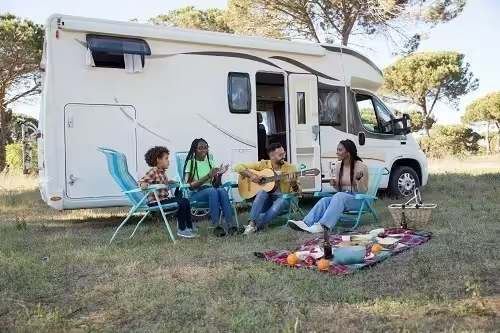
- Liability from guests, pets, and daily living—not just a camping weekend—because a full-time coach functions like a small home at a campsite or park
- Longer continuous exposure to hail, theft, fire, and weather while parked, including Texas spring hail that can strike a unit that never left the lot
Misrepresenting “occasional recreational use” when you truly live aboard can create claim disputes. Disclose full-time or extended travel honestly when you apply, and update the carrier if your lifestyle changes from weekend camping to living aboard most of the year.
2. Full-timer’s liability and personal effects
Full-timer’s liability
Enhances personal liability beyond a basic recreational policy—closer to the role homeowners Coverage E (personal liability) plays for a stick-built home. Useful when guests visit, you host at a site, or someone is injured around your coach. Ask what limit is available and whether an umbrella can sit above it once underlying requirements are met.
Personal effects / contents
Clothes, electronics, kitchen gear, and tools that live in the recreational vehicle need their own limit. Do not assume a former homeowners or renters policy still follows every item into full-time life on the road. Build the limit from a real inventory rather than a round-number guess.
Ask whether high-value items (jewelry, cameras, firearms, collectibles) need scheduling. Special limits often cap categories unless you list them, and those caps can surprise people who moved an entire household into a coach without reviewing the contents section of the form. A short inventory with photos and approximate values makes that conversation faster and helps you set a personal-effects limit that matches how you actually live aboard.
| Coverage idea | Why full-timers ask | Texas tip |
|---|---|---|
| Liability + full-timer enhancement | Guest injury / daily living exposure | Motorhomes on public roads still need liability meeting Texas financial-responsibility rules (commonly discussed at the 30/60/25 floor) |
| Physical damage (comp / collision or RV equivalent) | Hail, theft, collision, vandalism | Texas hail seasons hit roofs and AC units hard—even when parked |
| Personal effects | Your household lives aboard | Inventory belongings; schedule valuables |
| Emergency expense / trip interruption | Hotel or travel costs after a covered loss | Ask what triggers and daily caps apply |
| Roadside / towing | Breakdowns far from home base | Confirm motorhome vs. trailer towing differences |
3. Permanent residency and Texas ties
Many full-timers keep a Texas driver’s license, voter registration, or mailing address (family, mail service, or property) while traveling. Carriers and state agencies may treat “home state” and garaging differently from how you describe your lifestyle online. Practical points matter because the address on the application often drives rating territory, notice delivery, and which state’s rules the carrier applies:
- Tell the insurer where the recreational vehicle is primarily garaged or parked when not traveling, and keep that answer current when you change long-term parks
- Update addresses when you change long-term parks or storage lots so cancellation and renewal notices still reach you
- If you still own a Texas house, clarify whether that home policy or a recreational vehicle policy is primary for belongings and liability so you do not assume duplicate protection that is not there
- Trailer and fifth-wheel liability for a towing crash often follows the tow vehicle’s auto policy—the trailer still needs its own physical-damage story and often a separate conversation about living-aboard liability
This guide is not tax, domicile, or legal advice. For product context see Texas RV insurance what you need to know.
4. Parked vs. traveling: coverage design changes
Traveling / on the road
- Liability for motorhomes on public roads
- Collision exposure while moving
- Personal effects with you aboard
- Emergency expense after a covered breakdown or loss
Parked / storage / long park stay
- Comprehensive-style hail, theft, fire, falling objects
- Site liability if guests visit your coach
- Possible storage or laid-up options—ask; do not assume canceling is smarter
- Year-round continuity often still makes sense — year-round RV insurance in Texas
Parked does not mean risk-free in Texas. Spring and early summer hail regularly damages roofs, vents, and air-conditioner shrouds on units that never left the lot. Theft and vandalism also continue at storage yards and long-term parks, and fire or falling-object claims can still happen while the coach is hooked up for months at a time. Before you cancel for a “storage season,” ask what physical-damage and liability options remain while the coach sits—bare months are hard to undo after a storm or break-in, and reinstate timing rarely matches the day a claim happens.
5. Motorhome vs. travel trailer full-timers
How the coach moves changes which policy carries liability for a crash and which policy carries the living-aboard story. Full-timers in both categories still need honest full-time disclosure and realistic personal-effects limits. Mixing a thin “camping only” trailer policy with a full-time lifestyle is one of the most common gaps agents see when someone has lived aboard for months without updating the application.
- Motorhome (Class A / B / C): Treated as a motor vehicle when driven—Texas liability rules apply on public roads; physical damage and full-timer packages attach to the coach policy. Roadside and emergency-expense features often matter more when the living space and the engine share one chassis.
- Travel trailer / fifth-wheel: Tow-vehicle auto insurance usually handles liability for a towing crash; the trailer needs its own physical-damage and often a personal-liability / full-timer discussion for living aboard. See travel trailer insurance.
6. How Much Does Full-Time RV Insurance Cost in Texas?
There is no published Texas average for full-timer policies, but recreational RV coverage gives a starting point. Progressive reports that its Texas customers paid an average of $1,392.58 a year to insure a motorhome and $1,050.06 for a travel trailer in 2024. A full-time policy usually costs more than recreational coverage on the same rig because it adds full-timer’s liability, which works much like homeowners liability, and broader coverage for the personal belongings you live with.
What moves the price most: the value and class of the RV, how many miles you drive, your driving record, where the rig is parked and stored, the liability limits you pick, and whether you add replacement cost, emergency expense, or roadside coverage.
7. Practical checklist before you bind
Use this list as a conversation guide with your agent before you sign—not as a substitute for reading the form. Full-time recreational vehicle coverage is easier to get right at bind time than to fix after a claim.
- State full-time or extended-travel use clearly on the application so underwriting matches how you actually live
- Choose valuation (stated amount versus actual cash value) you understand, including how depreciation or agreed value would work after a total loss
- Set personal effects limits from a real inventory—not a guess—and schedule high-value categories when special limits would otherwise cap them
- Ask about full-timer’s liability limits and whether an umbrella can sit above once underlying requirements are met
- Confirm lienholder requirements if the coach is financed, including any physical-damage minimums the lender expects
- Keep coverage continuous when moving between parks—avoid bare months that leave hail, theft, and site liability uncovered
FAQ
Is full-timer’s liability the same as homeowners liability?
It plays a similar role for people who live in a recreational vehicle, but forms and limits differ by carrier. Read the endorsement—do not assume identical Coverage E (personal liability) language from a homeowners form will appear word-for-word on a coach policy.
Can I keep a Texas home policy and an RV full-timer policy?
Sometimes—if you still own a dwelling. Clarify which policy is primary for belongings and liability to avoid gaps or duplicate assumptions, especially when some items move between the house and the coach.
Do I need coverage when the RV sits for months?
Usually yes for physical damage and often for site-related liability. Canceling for “storage season” can leave hail and theft uncovered—see year-round guidance linked above.
Does full-time use automatically lower my premium?
No universal rule. Full-time exposure can raise some costs; shopping thoughtfully may still improve fit. Avoid any unsupported “save a fixed percent” claims.
Is this legal or domicile advice?
No. Educational consumer information only. Your applications, carrier guidelines, and Texas rules control outcomes.
Which Texas insurance companies cover full-time RVers?
Several national RV insurers offer full-timer endorsements in Texas, but availability varies by company and by rig. Ask specifically for full-timer’s liability and personal effects coverage, and confirm that the company knows the RV is your primary residence.
Which insurance company has the cheapest full-time RV rate in Texas?
No single company is cheapest for every full-timer. Rates vary with the RV, your record, and where you base it, so compare at least two or three quotes with identical liability limits, deductibles, and valuation.
